
 Español
  Français
  Italiano
  English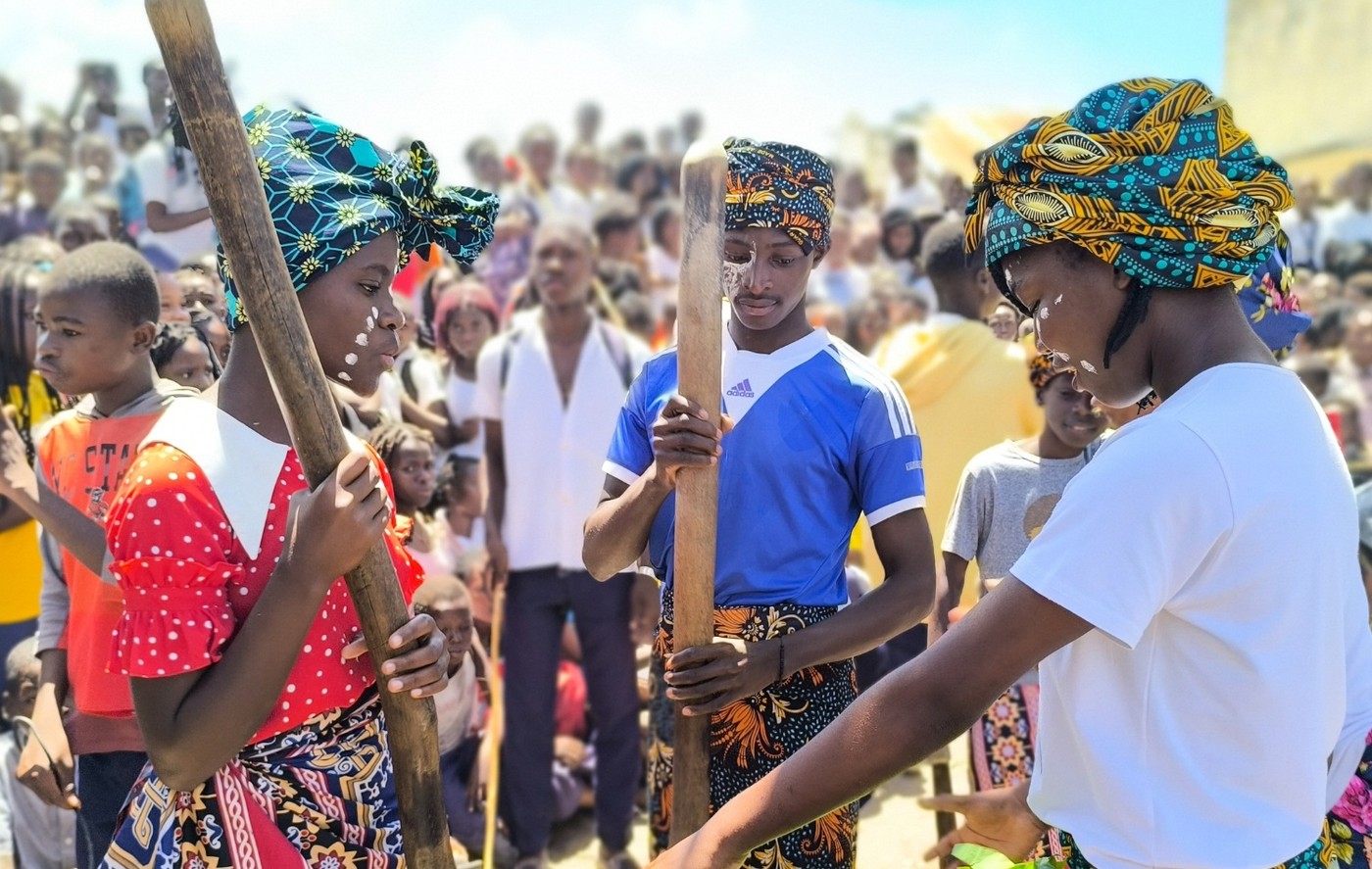
Culture for the promotion of Peace, Reconciliation and Social Cohesion


We guard our braids, our nightly songs,
for heritage must be protected in everyone's life;
in the rhythm of the batuque and the dancing step,
the present and a rediscovered past live side by side.
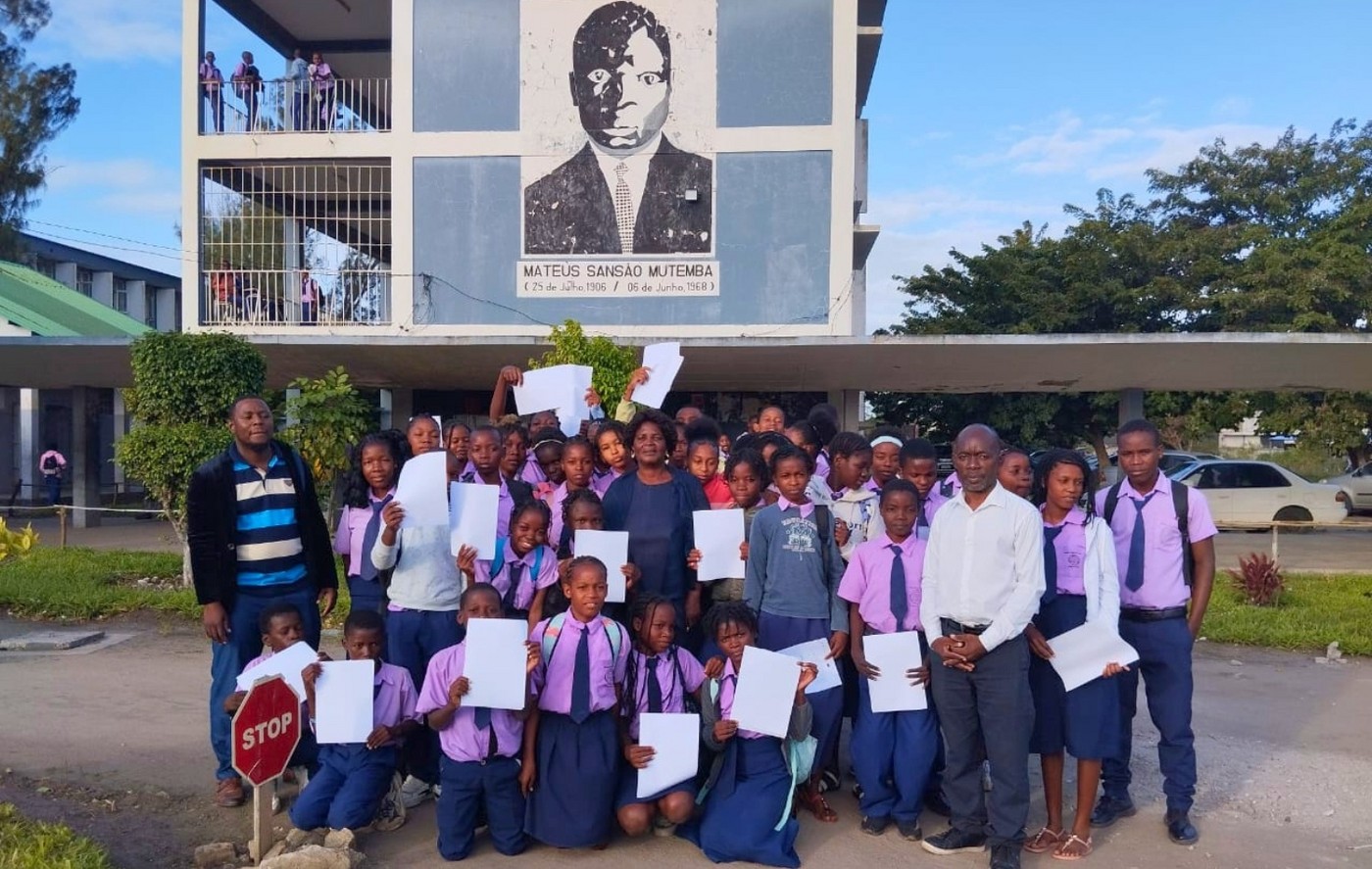
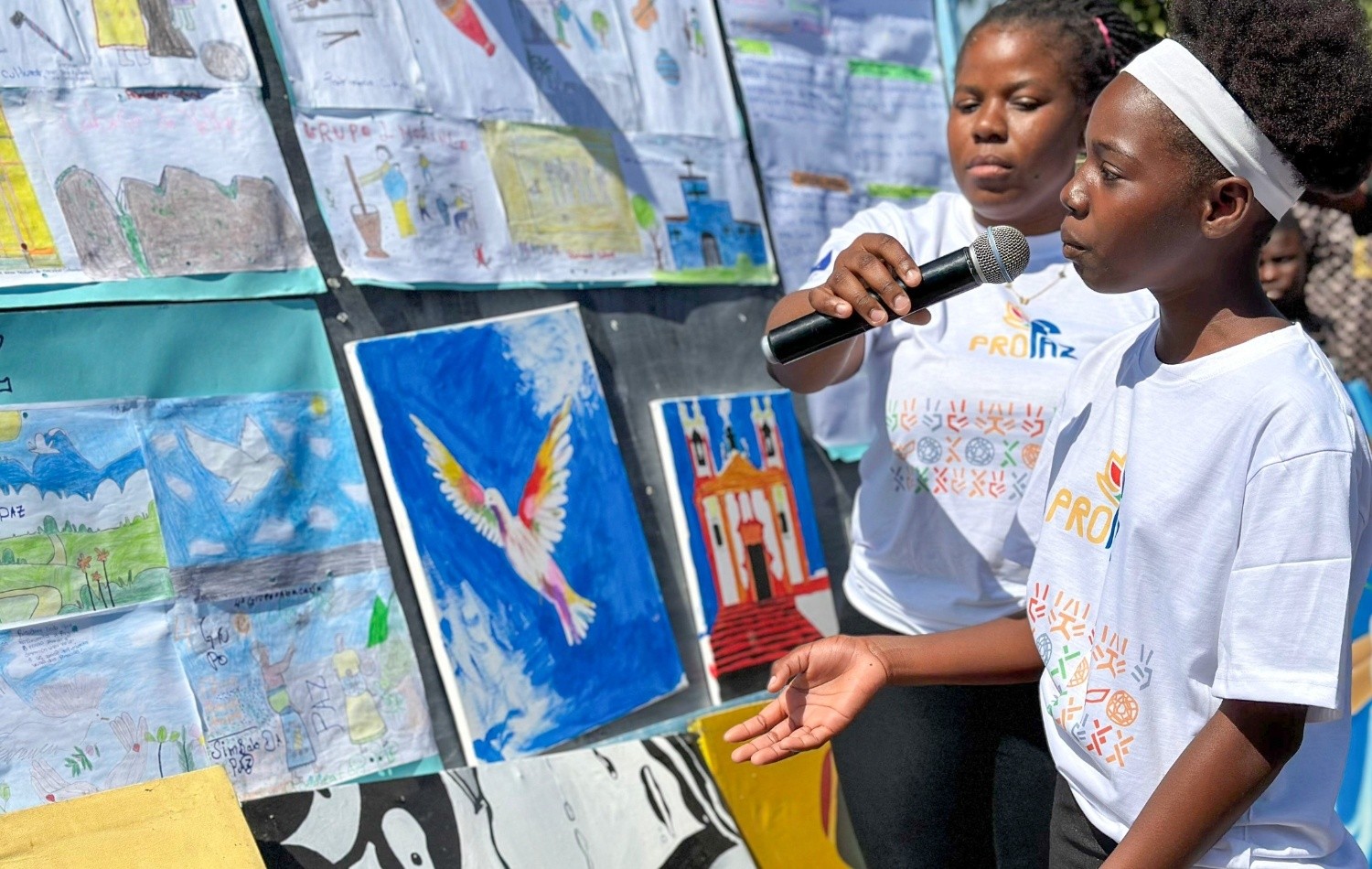
This is one of the many poems written and recited by young people from twenty schools in the provinces of Manica, Sofala, and Tete, in the central region of Mozambique, who participated in the Peace Clubs.
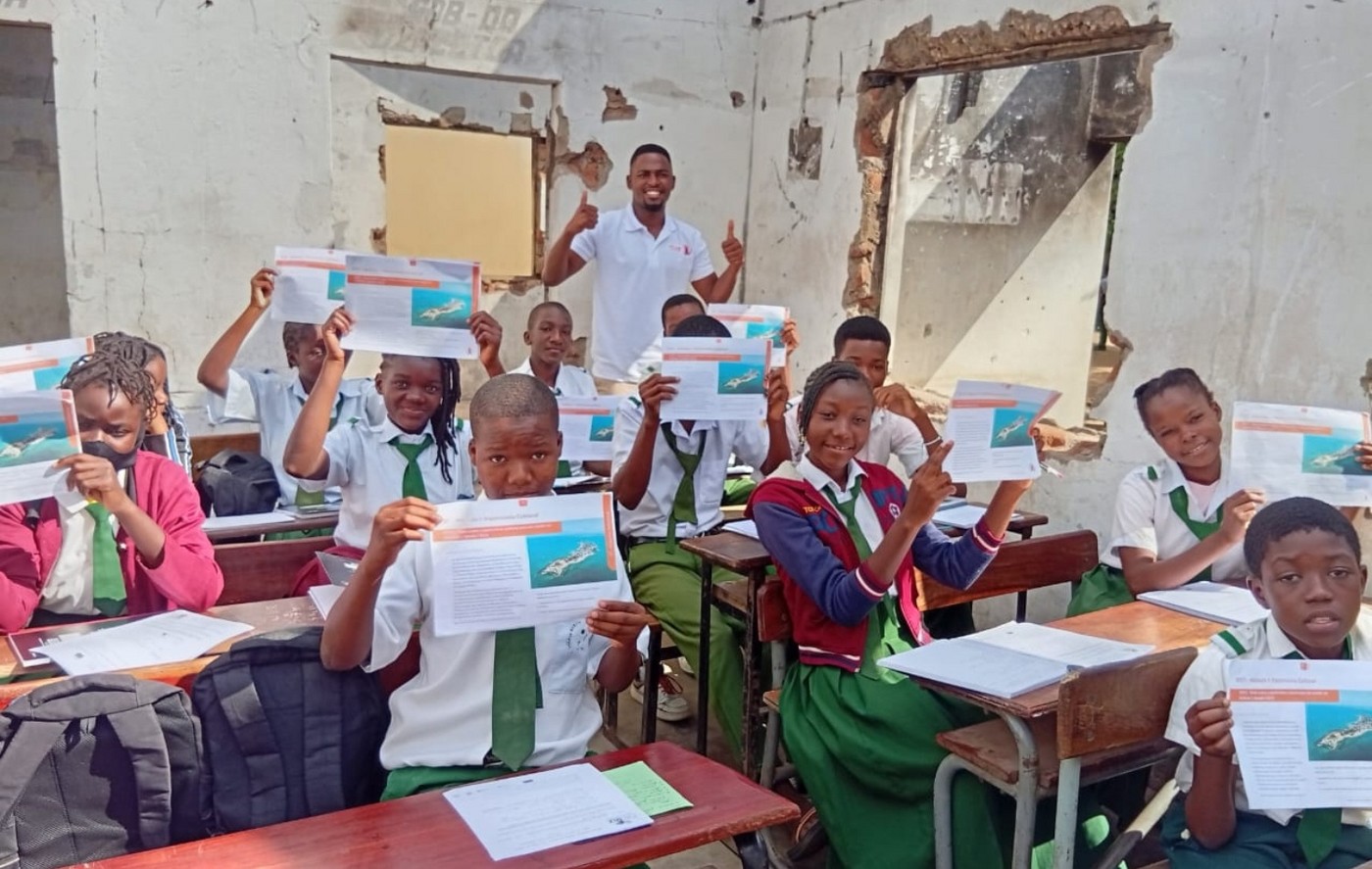
Within these groups, young people aged 11 to 17 learned about cultural heritage, peace, inclusion, and gender equality through poetry, visual arts, theater, and storytelling. These activities were made possible thanks to the ProPaz project, co-funded by the European Union, and the Promova project, funded by the Otto per Mille of the Waldensian Church.
In a context where schools are overcrowded and suffer from a chronic shortage of adequate spaces and educational materials, the project succeeded, despite the difficulties, in creating safe spaces for gathering. Here, boys and girls felt welcomed and were able to unleash their creative talent. They experimented with different methodologies that allowed them to express themselves and become more confident in their emotions and ideas. One boy commented: "The methodology I enjoyed the most was theater: even though we sometimes laughed during rehearsals, that’s where I learned so much about myself and my peers." Another shared: "I preferred poetry because it taught me how to give voice to my feelings."
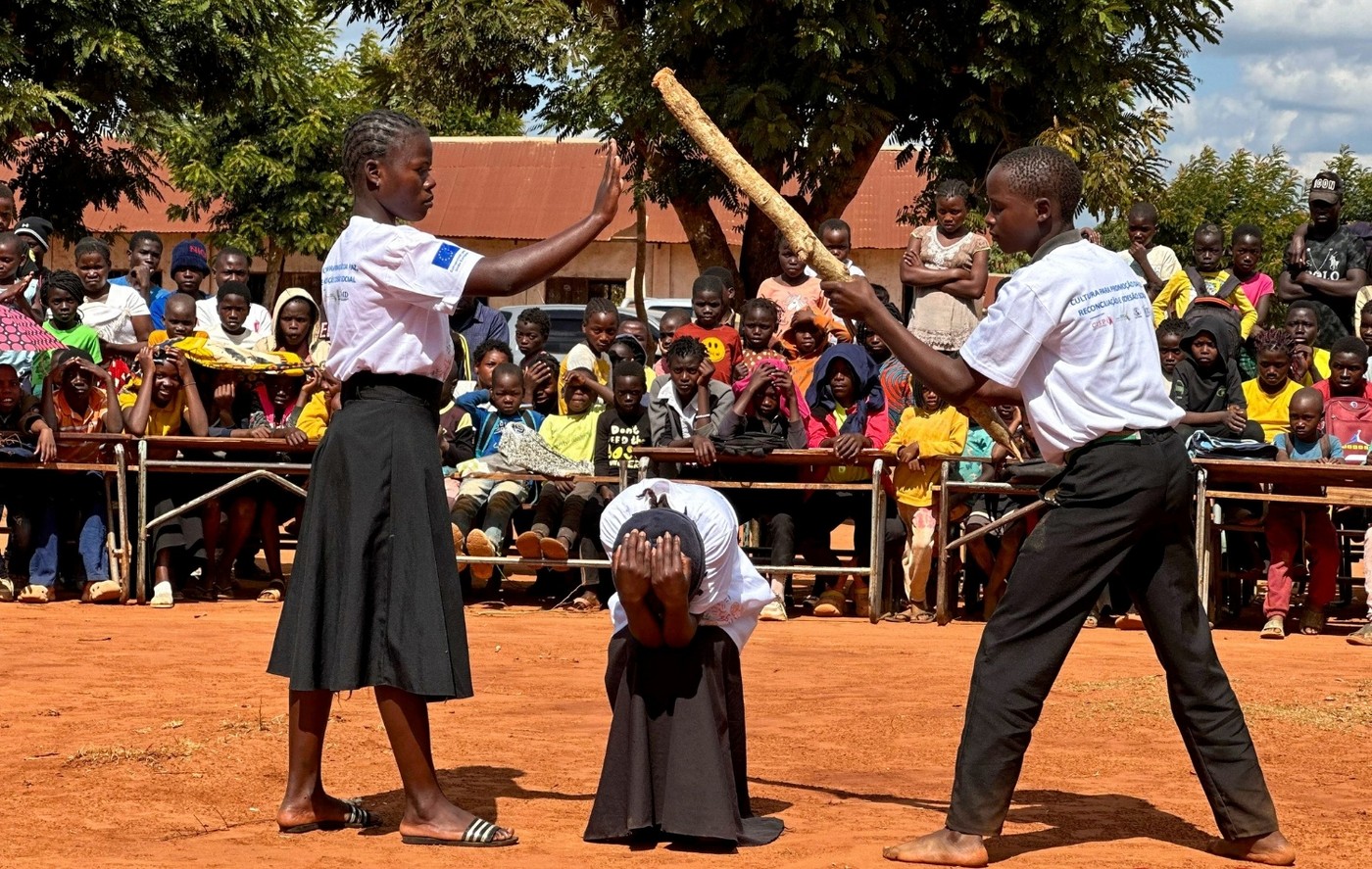
The positive impact of the Clubs' activities extended beyond the school environment into the communities where these schools operate. This was achieved through the organization of final events, where students showcased the artistic, theatrical, and literary work they had developed over the preceding months. Attended by families, local authorities, teachers, and community members, these events proved to be a vibrant space for gathering and discussing peace, inclusion, and the appreciation of Mozambican cultural heritage.
The activities carried out in the schools of Tete, Manica, and Sofala provinces represented a true experience of learning, creativity, and social transformation. The Peace Clubs also became a key point of reference for children with disabilities. At the Vila Nova school in Chimoio, Manica province, a student with a hearing disability shared:
At school, the other hearing children treat us reasonably well, but in the Peace Club, I feel much more welcomed as a deaf person. I really appreciated that they came to our school to interview me. Even though they spoke in Portuguese and I used sign language, we all made an effort to understand each other. And that is a very beautiful thing."
This is what the Peace Clubs are all about: a welcoming space to connect, share, and communicate even beyond words, in order to foster a deep and lasting culture of peace.